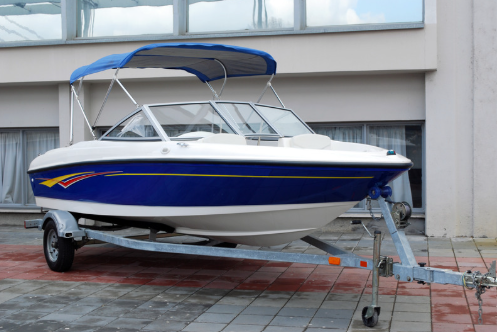
Towing a Boat in Australia: The Rules, Weights and Habits That Keep You Safe
Every summer, thousands of Aussies hitch up a boat and head for the water, and most of them do it on a single assumption: my


If you’re towing a horse float in Australia, chances are you’ve got questions. Can your vehicle handle the loaded weight? What’s the difference between ATM and GCM — and which one are you allowed to exceed? Do you need electric brakes or a breakaway system? And how do you load your horses so the float stays stable at highway speeds? This guide answers the most common horse float towing questions, covering weight limits, legal braking requirements, load placement, and the pre-trip checks that keep every trip safe.
Getting these details right matters more with a horse float than almost any other trailer. Unlike gear or luggage, horses shift their weight constantly — and that movement affects how your rig handles at highway speeds. Exceed a weight limit, skip a brake check, or load your horses poorly, and the risks are real: injury to your animals and others, loss of vehicle control, and potential legal liability. Here’s what you need to know, broken into the two areas that cause the most confusion — weight and capacity limits, and safety equipment.
Weight and Capacity Limits
Can My Vehicle Actually Tow This Float?
Your vehicle has a maximum towing capacity set by the manufacturer, and you’ll find it in the owner’s manual or on the compliance documentation. But, that towing capacity is only one of several limits you have to respect at the same time.
Have you checked the loaded weight of your float, as opposed to the empty weight? A dual float that weighs 1,200 kg empty can easily push past 2,500 kg once you add two horses and gear. If your vehicle is rated to tow 2,500 kg, you’re already at the edge before you’ve packed a single hay net.
A quick reality check: does your vehicle’s braked towing capacity comfortably exceed your float’s fully loaded weight, with margin to spare? If the answer is “just barely,” it’s worth reconsidering the pairing.
What’s the Difference Between Tare, ATM and GCM?
These three terms cause more confusion than any others, and mixing them up is how owners unknowingly break the law.
Think of it this way. Tare tells you where you start. ATM caps what the float can carry. GCM caps the whole rig. All three have to line up, and the moment one is exceeded, you’re overweight regardless of how the others look.

How Do I Calculate Horse Weight Without Going Over?
Horses are heavier than most people estimate. A typical adult riding horse sits somewhere around 450 to 600 kg, and a larger warmblood or draught type can go well beyond that. Two horses can quietly add over a tonne to your load.
To work out your real figure, add up:
Total those numbers and compare them against your float’s ATM. Then add your loaded vehicle weight and check the combined figure against your GCM. If either total creeps over, something has to come off.
The only way to know your true weight is a public weighbridge. Hitch up, load everything as you would for a real trip, and get the actual reading. A spec sheet won’t tell you what a full water tank, two horses and a boot full of gear really weigh on the day.
Safety and Equipment
Getting the weight right is half the job. The other half is making sure the float is set up to stop, stay stable, and behave predictably when conditions turn against you.
Do I Need Electric Brakes and a Breakaway System?
Trailer braking requirements in Australia are tied to the loaded weight of the trailer, measured as Gross Trailer Mass (GTM) or ATM depending on the rule. The general thresholds work like this:
Most loaded horse floats sit firmly in that upper band, which means electric brakes on all wheels and a breakaway system are almost always mandatory. A breakaway system is the safety device that automatically applies the trailer’s brakes if the float ever separates from the tow vehicle. It runs off its own small battery, which is why it’s important to test the battery (more on that shortly).
Because requirements can vary slightly between states and territories, it’s worth confirming the current rules with your local road authority before you rely on any single figure. The thresholds above reflect the widely applied national standard, but the responsibility to check sits with you.

How Should I Load the Horses for Stability?
Loading is where physics decides whether your trip is smooth or terrifying. The goal is to keep weight low and balanced, with the right amount of downward pressure on the tow ball.
The guiding principle is to keep the heavier weight forward of the axle, not hanging off the back. Weight sitting too far to the rear reduces the downward force on the coupling and makes the float far more likely to sway — that unnerving side-to-side snaking that gets worse the faster you go. As a general rule, aim for the heavier horse to travel on the side and position that keeps the load balanced and slightly nose-down at the coupling.
Why does this matter so much at highway speed? Because sway feeds on itself. Once a poorly loaded float starts oscillating, crosswinds, passing trucks and sudden steering inputs all amplify it. Good vision behind you helps you catch that instability early, which is one reason properly extended towing mirrors are worth having on any tow rig — you can’t correct what you can’t see.
What Pre-Trip Checks Are Essential?
A five-minute check before every trip prevents the vast majority of roadside disasters. Run through this list each time, not just occasionally:
Habit and time pressure can often mean that some of these steps are skipped, but the horse in the back has no say in the matter, and the checklist is the only thing standing between routine and regret.
In summary, know your Tare, ATM and GCM, and never assume — weigh the rig loaded at a public weighbridge. Confirm your braking and breakaway setup meets the requirements for your float’s weight. Load for balance, not convenience. And run the same pre-trip checks every single time.
Get those fundamentals right and the trip becomes what it should be: uneventful. For horse owners, uneventful is exactly the goal — you and your horses arriving calm, safe, and ready for whatever the day holds.

Frequently Asked Questions About Towing a Horse Float
Here are answers to some of the most common questions horse float owners ask about towing safely and legally in Australia.
How do I know if my vehicle can tow my horse float?
Check your vehicle’s braked towing capacity in the owner’s manual, then compare it against your float’s fully loaded weight — not just the empty Tare weight. Include the horses, gear, water, and feed in your estimate. If your towing capacity only just covers the load, that’s a warning sign, not a green light. As a practical safety tip, aim for at least 10–15% of headroom between your vehicle’s towing capacity and your actual loaded float weight. This margin matters when you’re driving uphill, braking in an emergency, or managing sway on a windy highway.
What’s the difference between Tare, ATM and GCM?
Tare is the empty weight of your float. ATM (Aggregate Trailer Mass) is the maximum legal weight of your loaded float — horses, gear, water and all. GCM (Gross Combination Mass) is the combined weight limit of your loaded tow vehicle and loaded float together. You need all three figures to work simultaneously — being under one doesn’t mean you’re safe on the others. Safety tip: visit a public weighbridge with your rig fully loaded as you’d travel, and write down the real figures. Do this once a year or whenever your setup changes significantly.
How do I calculate the total weight of my horse float?
Start with the Tare weight, then add each horse (typically 450–600 kg each, more for large breeds), plus all gear, hay, feed and water. Water weighs approximately 1 kg per litre, so a full tank adds up quickly. Compare your total against the float’s ATM and your vehicle’s GCM. Safety tip: never estimate horse weight — use a weighbridge or a calibrated weight tape. Horses can vary by 50–100 kg depending on condition, and that variance can push you over your legal limit without you realising it.
Do I legally need electric brakes and a breakaway system?
In Australia, braking requirements are based on your float’s loaded weight. Floats loaded above 2,000 kg require brakes on all wheels and an independent breakaway system. Most horse floats carrying two horses with gear and water will exceed this threshold. Safety tip: test your breakaway battery before every trip, not just occasionally. Disconnect the breakaway cable while stationary to confirm the brakes activate — a battery that hasn’t been tested or charged in months may fail to trigger when it matters. Replace the battery every one to two years as a precaution.
How should I load my horses to prevent sway?
Keep the heavier weight forward of the axle and aim for a slightly nose-down angle at the coupling — this maintains adequate downward pressure on the tow ball. For a single horse in a two-horse float, load on the driver’s side (the right in Australia). Safety tip: if your float starts to sway at speed, resist the urge to brake hard. Instead, ease off the accelerator gradually and hold a steady course until the oscillation settles. Fitting a weight distribution system or sway control device can help prevent the problem from developing in the first place.
What should I check before every trip?
Run through this before you leave: tyre pressure and condition on both the vehicle and float (including the spare), tow ball coupling locked and tested, safety chains crossed and connected, breakaway battery charged and functional, all lights working, and all float doors, ramps, partitions and rump bars secured. Safety tip: keep a printed checklist in your tow vehicle and tick each item off physically — not mentally. It takes five minutes and removes the chance that habit or time pressure causes you to skip a step. Check float tyres closely if the float has been sitting unused for several weeks, as sidewall cracking can develop even when tread looks fine.
Do I need extended mirrors to tow a horse float?
Yes — in most states, if your float is wider than your tow vehicle, you are legally required to fit towing mirrors that give you adequate rear vision. Beyond the legal requirement, extended mirrors are a genuine safety tool. Safety tip: adjust your mirrors before you move off so you can clearly see both sides of the float and the road behind you. Being able to spot the early signs of sway — a slight side-to-side movement at the rear — lets you respond before it escalates into a loss of control situation.
Visit our Towing Hub and dive into expert advice, practical tips, and detailed guides designed to make towing easier, safer, and more enjoyable.
Every summer, thousands of Aussies hitch up a boat and head for the water, and most of them do it on a single assumption: my
If you’re towing a horse float in Australia, chances are you’ve got questions. Can your vehicle handle the loaded weight? What’s the difference between ATM

You’ve been researching a set of towing mirrors (or another accessory) for weeks. And there it is — the same model you’ve been eyeing, but