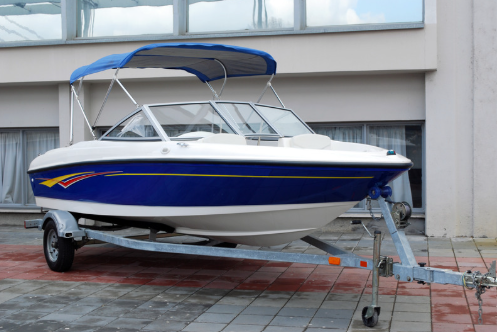
Towing a Boat in Australia: The Rules, Weights and Habits That Keep You Safe
Every summer, thousands of Aussies hitch up a boat and head for the water, and most of them do it on a single assumption: my


Ask many of us how much we can safely tow, and we’ll point straight to the figure stamped on the towbar or printed in the owner’s manual. The 80% towing rule suggests it isn’t really the weight you should be hauling behind you. It’s a straightforward guideline that’s gained serious traction among caravanners, tradies, and four-wheel drive enthusiasts across Australia. Here’s what it means, why it matters, and how to put it into practice before your next trip.
What the 80% Towing Rule Means
The 80% towing rule recommends keeping your actual loaded trailer weight at or below 80% of your vehicle’s maximum rated towing capacity.
Put simply — you don’t tow right up to the limit. You leave yourself a buffer. If the manufacturer says your ute or wagon can haul a certain weight, this rule asks you to treat 80% of that figure as your practical ceiling.
It’s worth noting the word “recommends.” This isn’t legislation, and you won’t find it in the Australian Road Rules. It’s a safety guideline born from real-world experience — the kind that comes from towing heavy rigs over long distances, up steep mountain passes, and into howling headwinds on the Nullarbor. So why would you deliberately leave 20% of your towing capacity unused? The answer sits in the gap between how ratings are tested and how we actually drive.
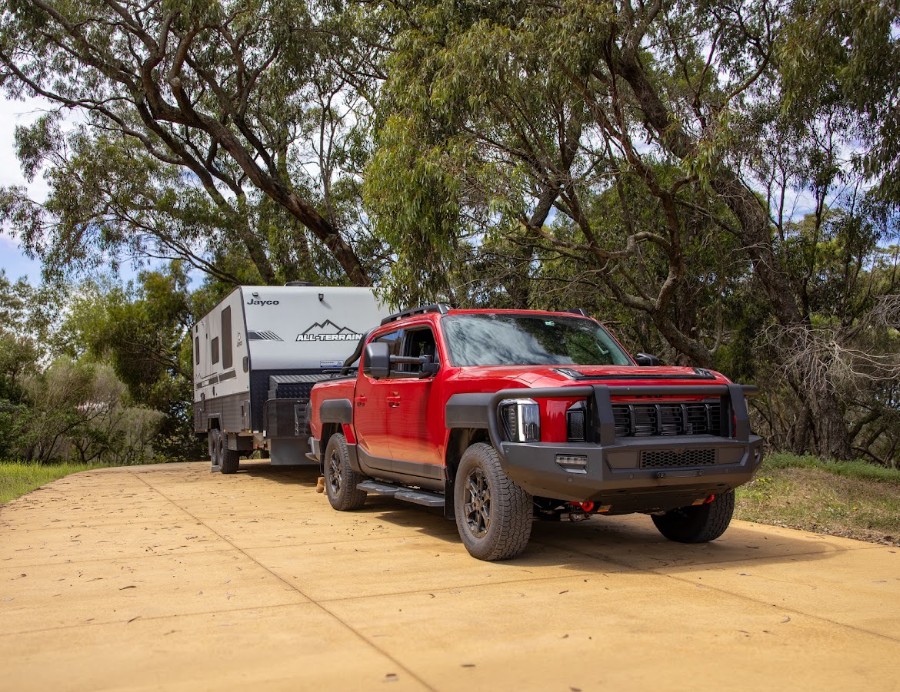
Why the 80% Rule Matters
Manufacturer ratings look reassuring on paper. The trouble is how those numbers are produced — and how far removed they are from a fully loaded run up the Great Dividing Range.
Ratings Come From Ideal Conditions
Towing capacities are typically tested under controlled, near-laboratory conditions: a brand-new vehicle, flat ground, and no surprises. That’s a long way from the reality most Australians face.
Those tests don’t account for:
When was the last time you towed on perfectly flat ground with a factory-fresh vehicle? For most of us, never. The 80% rule closes the gap between the test conditions and the highway.
It Builds In a Safety Buffer
That extra 20% margin is really a buffer for the unexpected. It gives you more braking distance when traffic suddenly stops ahead and it gives you more control when a strong gust catches the van or a road train blows past on the highway.
When you tow at 100% of capacity, there’s nothing held in reserve. Every emergency manoeuvre becomes harder, and every stop takes longer. The buffer is quiet insurance you hope you never need — but you’ll be glad it’s there.
It Reduces Wear and Tear
Towing at full capacity puts your vehicle under constant strain. Transmissions run hot, engines work overtime, and brakes and suspension components wear down far faster than they should.
Tow at 80% and you ease that load considerably. Over the life of the vehicle, that can mean fewer trips to the mechanic, longer service intervals, and a vehicle that holds its value.
It Absorbs Calculation Errors
Confusing “tare” weight with loaded weight can catch out many. The figure quoted for a caravan or trailer typically assumes empty tanks and no gear on board.
Once you add full water tanks, gas bottles, food, tools, recovery gear, and passengers, the real weight climbs quickly — often by several hundred kilograms. The 80% buffer leaves room for those miscalculations, so a small underestimate doesn’t push you over the edge.
A Practical Example
Numbers make this rule much easier to grasp, so let’s work through a realistic example.
Say your vehicle has a maximum towing capacity of 3,500 kg. Apply the 80% rule:
3,500 kg × 0.80 = 2,800 kg
Your fully loaded trailer should weigh no more than 2,800 kg. That 700 kg gap isn’t wasted capacity — it’s your safety margin for hills, wind, and all those extra kilos that always seem to sneak into the packing.
The same maths applies to any figure. Take your rated towing capacity, multiply by 0.8, and you’ve got a sensible target for your loaded trailer weight.

Important Limits You Still Need to Check
The 80% rule is a useful starting point, but it’s not a free pass. It doesn’t replace the official limits that apply to your vehicle and setup. Treat it as one guideline among several, and always cross-check these three critical figures.
Payload Capacity
This is the total weight of everything the vehicle carries: passengers, cargo, accessories, and the trailer’s towball download resting on the hitch. It’s easy to overlook, but loading up the cab, the tray, and the roof rack all eats into what you can safely tow.
Gross Vehicle Mass (GVM)
The GVM is the maximum permitted operating mass for your vehicle when fully loaded. Exceed it and you’re overweight — full stop — regardless of what the towing capacity plate says. This is a hard legal limit, not just a suggestion.
Towball Download
Towball download (the equivalent of tongue weight) is the downward force the trailer exerts on the towball. Ideally, it should sit between 9% and 15% of the total trailer weight.
Too little, and the trailer can start to sway — sometimes dangerously. Too much, and you overload the rear axle and lighten the steering. Getting this balance right is one of the most underrated parts of safe towing, and it’s well worth measuring at a weighbridge rather than guessing at the campsite.
The 80% towing rule poses a straightforward question: just because you can tow to the rated limit, does that mean you should? For Australian conditions — the wind, the grades, the corrugated dirt roads, and the gear we never quite manage to leave behind — the answer is usually no.
Here’s what to do before you head off:
Towing safely isn’t about squeezing every last kilogram out of your setup. It’s about arriving at the other end with control to spare. If you’re putting together a new tow vehicle or upgrading your gear, it pays to think about the whole system — mirrors, weight distribution, and load management included — well before you hit the highway.
Every summer, thousands of Aussies hitch up a boat and head for the water, and most of them do it on a single assumption: my

If you’re towing a horse float in Australia, chances are you’ve got questions. Can your vehicle handle the loaded weight? What’s the difference between ATM

You’ve been researching a set of towing mirrors (or another accessory) for weeks. And there it is — the same model you’ve been eyeing, but