
Australia’s Most Scenic Road Trips
Grab the keys, pack a bag, and roll down the windows. Australia offers some of the most dramatic, diverse, and breathtaking driving routes on the

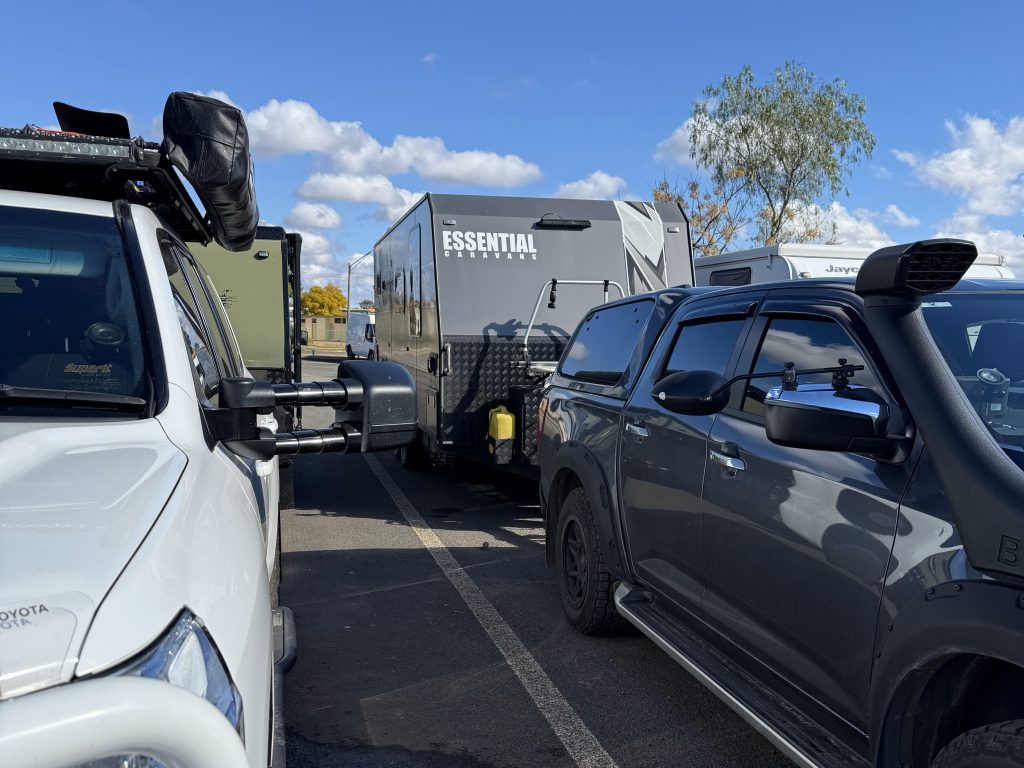
Reversing a caravan onto a tight site while an audience of fellow campers pretends not to watch is one of towing’s great humbling experiences. You crane your neck, second-guess every turn of the wheel, and wonder why something so routine feels so stressful. Is the problem your driving skill, or is it what you can actually see?
For most people, it’s the second one. This post is for caravan owners, boat towers, and horse float drivers who want reversing to feel controlled rather than chaotic. You’ll learn why factory mirrors let you down, how proper towing mirrors change the picture, and a few practical tips to back into any site with more confidence.
Why Factory Mirrors Fall Short When Reversing
Standard side mirrors are engineered for one job: everyday driving. They frame the lane beside you and a slice of the road behind. That’s plenty for the school run or the daily commute.
Hook up a caravan, though, and the equation breaks. The moment your load sits wider than your tow vehicle, your factory mirrors stop showing you the very thing you need to watch — the sides and rear of the van. What you get instead is a close-up of your own caravan’s front corner, and beyond that, a blind spot big enough to hide a picnic table, a bollard, or a small child.
Add a canopy or a loaded ute tray, and your interior mirror is often useless before you’ve even reversed an inch. So you’re left leaning out the window, relying on a spotter’s hand signals, or simply guessing. None of that is a skill problem. It’s a vision problem.

The Real Cost of Poor Rear Vision
Limited vision can cost you minor scrapes and cracked awning arms. Then there’s the slow, tense reversing that holds up a queue of caravanners behind you at a busy park.
But the bigger cost is confidence. Drivers who can’t see clearly start avoiding tight sites, skipping certain campgrounds, or dreading the arrival part of every trip. That’s a strange trade-off to accept when the fix is so straightforward.
Why do so many people put up with it? Often because clip-on mirrors were their first experience, and those wobble and blur at the worst moments — reinforcing the idea that towing mirrors just aren’t that helpful. That conclusion is based on the wrong tool.
How Proper Towing Mirrors Change the Picture
Full replacement towing mirrors solve the reversing problem at its source: they extend your line of sight past the width of your caravan. Instead of staring at the front corner of your van, you get a clear, stable view all the way down its flank to the rear.
Clearview builds three styles designed exactly for this, and each suits a slightly different setup.
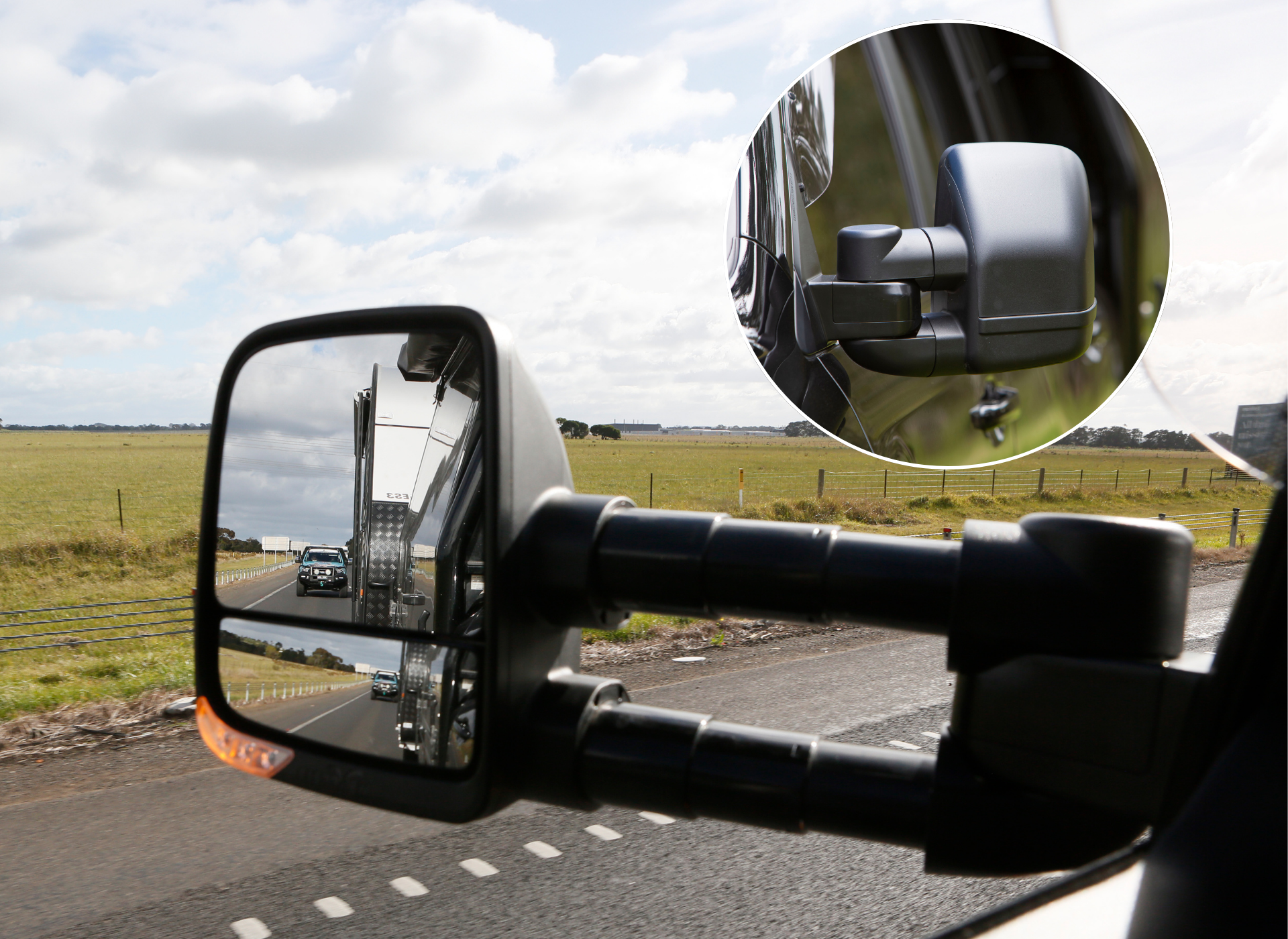
Next Gen — The Dual Mirror Design
The Next Gen uses a twin mirror layout with a taller head. The large flat top mirror gives you an accurate, true-to-life view for lining up your hitch and judging distance as you reverse. Below it sits a smaller convex mirror that widens your awareness of what’s happening around the van.
That combination is ideal for frequent reversing and heavier loads, because you get precise alignment and broad awareness at the same time.
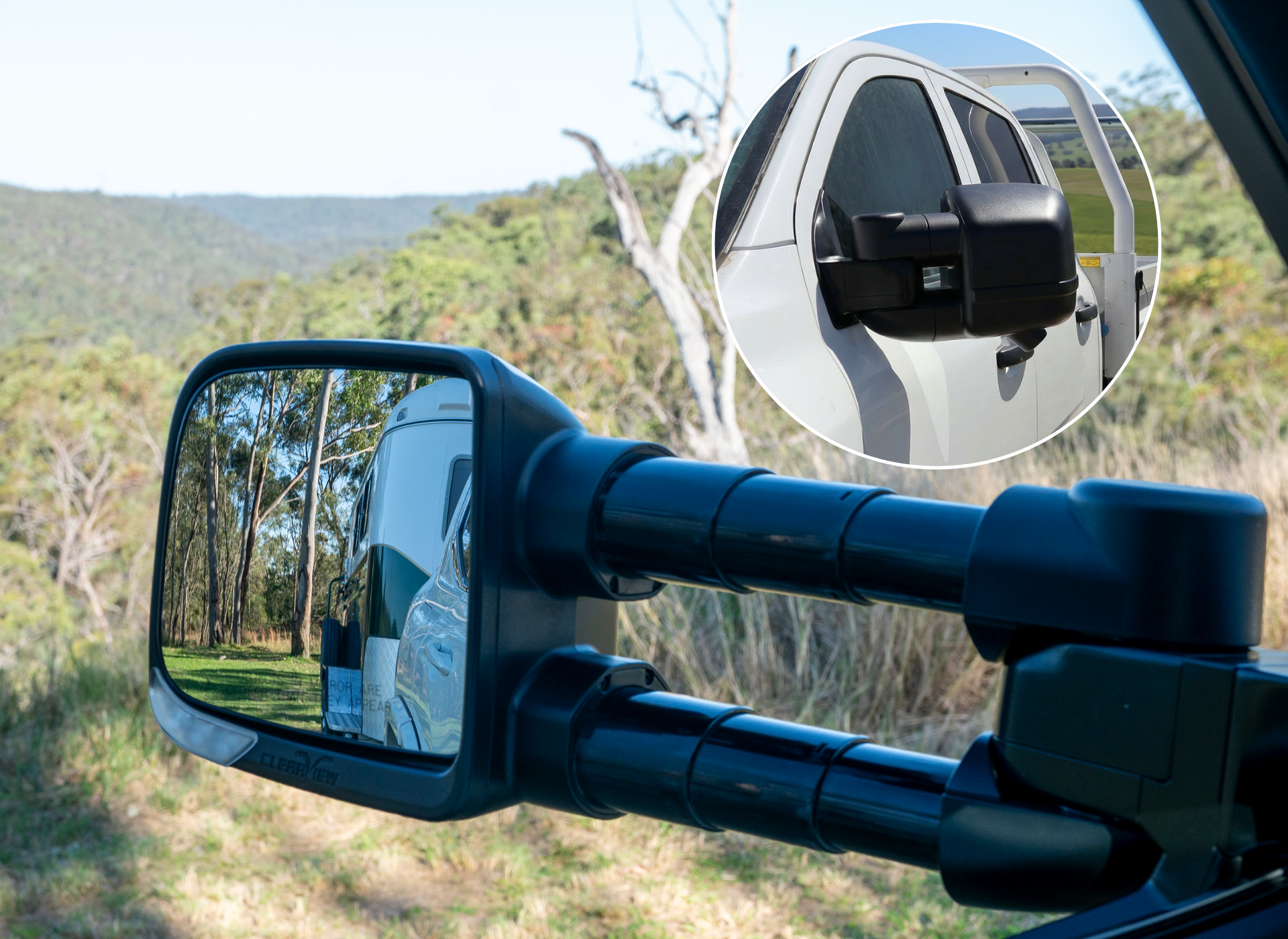
Compact — Factory Look, Extra Reach
The Compact keeps things simple with a single large convex mirror in a low-profile shape. It looks close to a standard factory mirror but adds the reach and wide field of view that reversing demands.
Choose the Compact if you want a tidy, original appearance for daily driving while still gaining serious side vision when you back into a site.
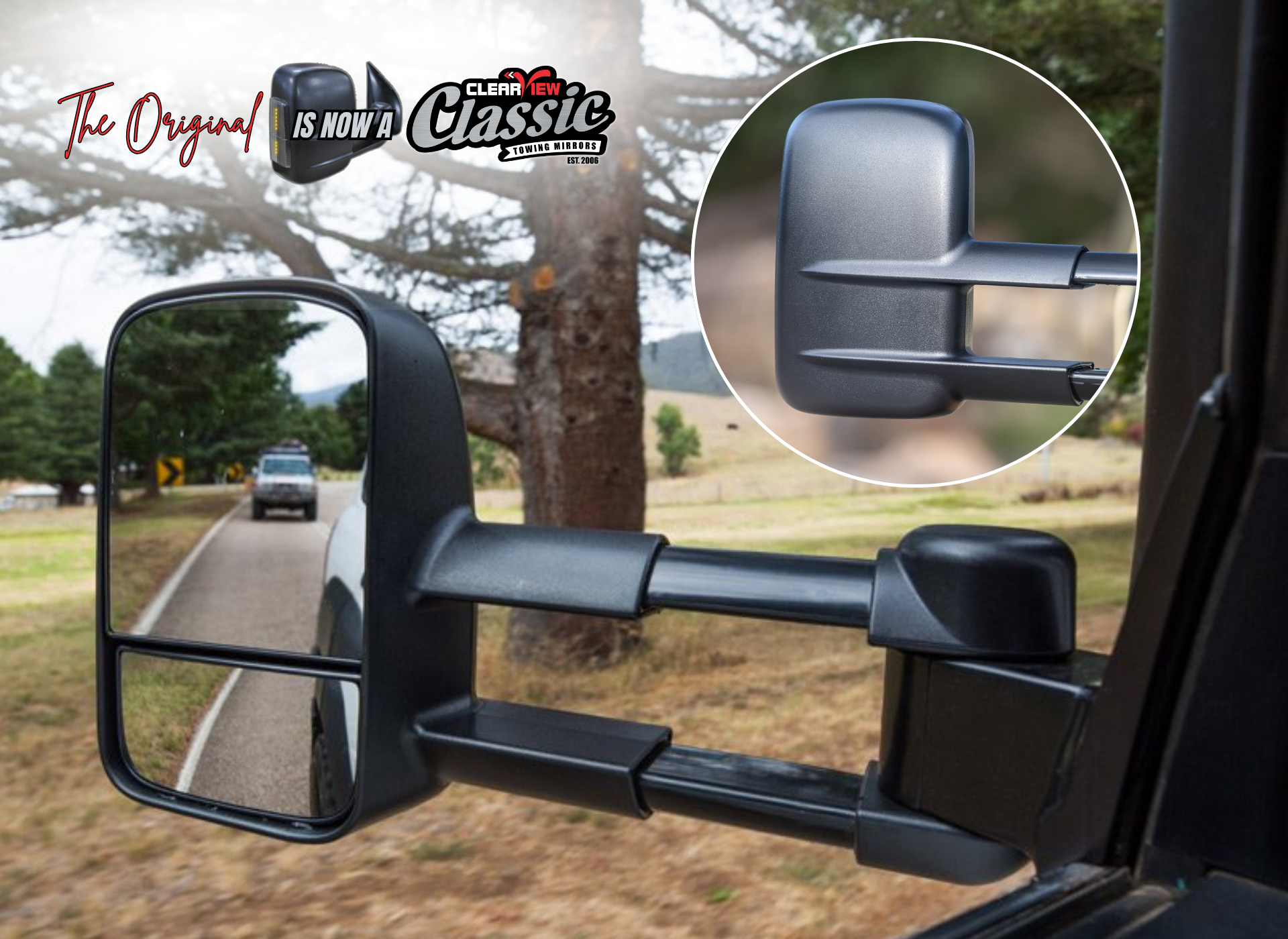
Classic — Dependable Performance in a Larger, Simpler Package. Clearview Classic Towing Mirrors are built for drivers who want safer towing visibility, dependable performance, and genuine Clearview quality without paying for premium features they may not need. Classic models feature an extra-large, flat top mirror (1:1 ratio) for an accurate reflection of distance behind the vehicle, alongside a smaller, convex bottom mirror to minimise blind spots. Choose the Classic if you’re wanting a straightforward, price-sensitive mirror.
Practical Tips for Reversing a Caravan With Better Mirrors
Good towing mirrors do most of the heavy lifting, but a few habits sharpen your technique.
Vision Is the Foundation of Confident Towing
Most reversing struggles aren’t about talent — they’re about what the driver can and can’t see. Factory mirrors were never built for towing.
Ready to make reversing the easy part of every trip? Use the mirror filter on our website to find the exact towing mirrors made for your vehicle’s make, model, year, and body type — and see what proper vision actually looks like.
Read more about Australian Caravan Etiquette here
Read more about Essential Towing Guide: Safety, Weights, and Tips here
Grab the keys, pack a bag, and roll down the windows. Australia offers some of the most dramatic, diverse, and breathtaking driving routes on the

They’ve got the vehicle, the accessories and strong opinions about both. So what do you buy the 4WDer who seems impossible to shop for? Start

Shopping for someone who takes their touring setup seriously? Give them an upgrade that makes life on the road easier, from effortless fridge access to