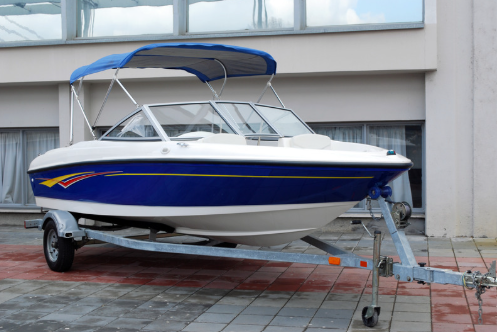
Towing a Boat in Australia: The Rules, Weights and Habits That Keep You Safe
Every summer, thousands of Aussies hitch up a boat and head for the water, and most of them do it on a single assumption: my

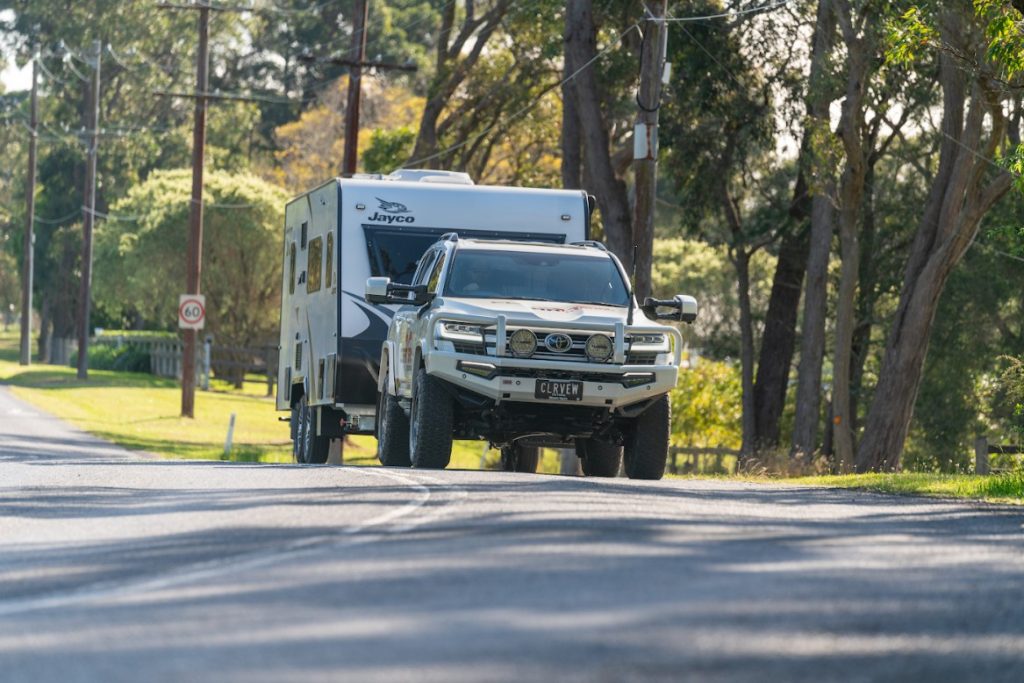
You’re cruising down the highway, the caravan tracking nicely behind you, and the sign says 110 km/h. So you can sit on that number, right? Not so fast. The answer depends on three things: which state or territory you’re driving through, how much your rig actually weighs, and what your caravan’s compliance plate says.
In this guide, we’ll walk through what we know with confidence about Australian towing speed rules, why your caravan manufacturer’s rating can override the road signs entirely, and what happens to your safety and fuel bill when you push past 100 km/h.
The Short Answer
Whether you can legally tow at 110 km/h comes down to the applicable state or territory road rules, the weight of your vehicle-and-caravan combination, and any lower speed limits set by your caravan manufacturer, tyre ratings, or insurer. In some places, 110 km/h may be permitted where roads are signed for it. In others, you’re capped at 100 km/h regardless.
There’s also a second layer: your caravan manufacturer may cap the rated speed well below whatever the road signs say — and can void your insurance if you ignore it.
The safest rule of thumb: always apply the lowest applicable limit, whether that comes from a road sign, state law, your compliance plate, or your tyre ratings.
Towing Speed Limits Across Australia
Australia does not have a single national towing speed rule. Speed limits for towing vary by state and territory, and in some cases by the mass of your vehicle and trailer combination. Because road rules can change, always verify the current rules with the relevant road authority in each state you plan to travel through before you depart.
Here’s what’s currently understood for each jurisdiction — noting where the information is confirmed from official sources, and where you should double-check.
Western Australia: 100 km/h Maximum
In WA, the rule is well-established and straightforward. When towing a caravan or trailer, the maximum speed is 100 km/h, regardless of what the road signs say and regardless of your GVM or GCM. If you’re towing, 100 km/h is your ceiling.
Key takeaway: Travelling through WA? Set your cruise control to 100 and leave it there.
New South Wales: 110 km/h, With a Critical Weight Condition
Transport for NSW confirms that if your towing vehicle has a GVM over 4.5 tonnes, or your vehicle-and-trailer combination has a GCM over 4.5 tonnes, you must not exceed 100 km/h regardless of the posted speed limit.
In plain terms:
If your towing vehicle’s GVM and your combined GCM both sit at or below 4.5 tonnes, you may travel up to the signed limit — including 110 km/h where posted.
If either figure exceeds 4.5 tonnes, you’re capped at 100 km/h everywhere in NSW.
Do you actually know your GCM when the van is fully loaded with water, gas, food, gear and passengers? Plenty of owners assume they’re under 4.5 tonnes, then discover at a public weighbridge that they’re not. Weigh your rig loaded — don’t guess.
Queensland, Victoria, Tasmania, South Australia and the Northern Territory
In these states and territories, towing speed rules are generally tied to the posted speed limit, but specific conditions and vehicle mass restrictions may apply. Rather than stating a blanket rule for each, we’d strongly recommend:
Your Caravan’s Compliance Plate Can Override Everything
Even in places where the law may permit 110 km/h, some caravan manufacturers cap their vans at 100 km/h. This rated speed is typically stamped on the compliance plate or noted alongside the tyre specifications.
This is important, because exceeding a manufacturer’s rated speed can void your insurance. Picture the worst case: a rollover at 108 km/h in a van rated to 100. If the insurer finds you were travelling above the rated speed, your claim could be denied entirely. Suddenly that extra 8 km/h looks like a very costly shortcut.
Before your next trip, take a few minutes to:
Key takeaway: The lowest applicable limit always wins — whether that’s the road sign, the state law, the compliance plate, or the tyre rating. There is no exception that’s worth the risk.
Safety: Why Speed Matters More When You’re Towing
Legal and sensible aren’t always the same thing. Even when you’re permitted to sit on 110 km/h, the risks increase with every extra kilometre per hour when you’re towing a heavy van.
The biggest danger is caravan sway, sometimes called snaking. At higher speeds, a van becomes far more prone to that unsettling side-to-side motion — and once it starts, it’s harder to bring under control. If sway does begin, the general advice is to avoid slamming on the vehicle’s brakes except as a last resort. Instead, hold a steady speed or ease off gradually until the sway settles.
Add to that the variables you can’t always predict:
Key takeaway: Fitting properly extended towing mirrors also helps here. Clear rear vision lets you spot instability early — before it becomes a serious situation.
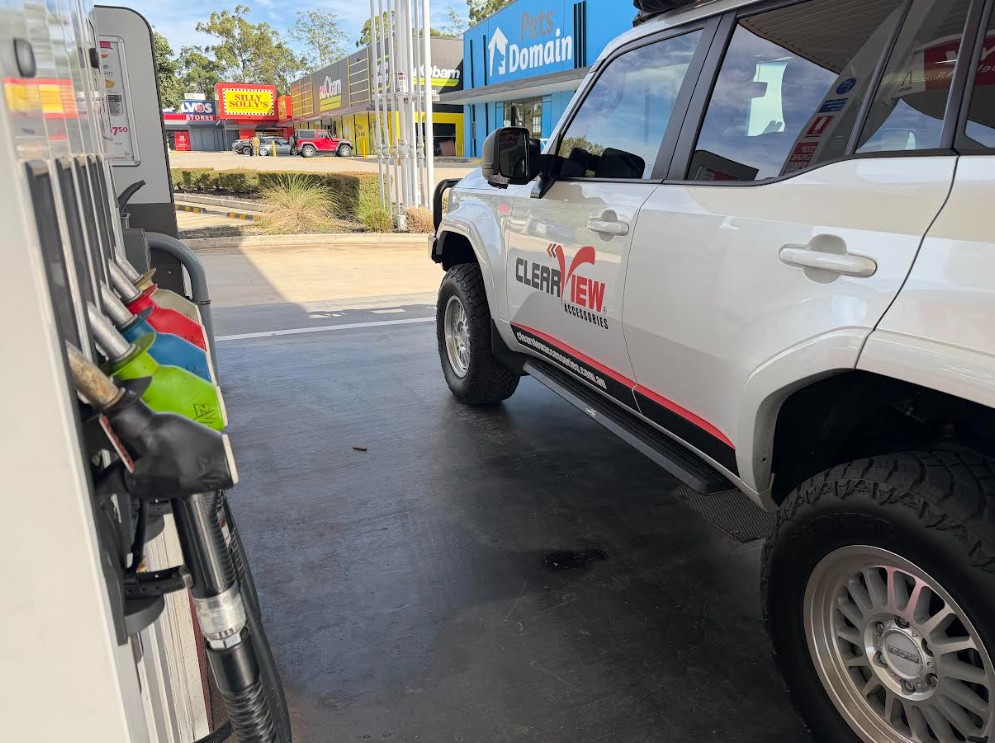
Fuel Economy: The Real Cost of That Extra 10 km/h
There’s a strong hip-pocket argument for keeping your speed in check, and it’s one that adds up quickly over a long trip. Aerodynamic drag doesn’t increase in a straight line with speed — it climbs steeply. Towing a large, boxy caravan at 110 km/h generates significantly more drag than cruising at 90 to 100 km/h, and fuel consumption rises sharply as a result.
The practical trade-off looks like this:
Common Mistakes to Avoid
Whether you can tow a caravan at 110 km/h in Australia depends on the state or territory you’re in, the combined mass of your vehicle and van, and any lower speed limit set by your caravan manufacturer, tyre ratings, or insurer. In WA, 100 km/h is the firm maximum for all towing. In NSW, it depends on whether your GVM and GCM stay at or below 4.5 tonnes. Elsewhere, the rules vary — and they’re worth checking with the relevant authority before you travel.
No matter where you are, the lowest applicable limit is the one you must follow. Weigh your loaded rig, check the compliance plate, and confirm the rules for every state on your route. That’s not overcaution — it’s just good preparation.
Every summer, thousands of Aussies hitch up a boat and head for the water, and most of them do it on a single assumption: my

If you’re towing a horse float in Australia, chances are you’ve got questions. Can your vehicle handle the loaded weight? What’s the difference between ATM

You’ve been researching a set of towing mirrors (or another accessory) for weeks. And there it is — the same model you’ve been eyeing, but